.svg)
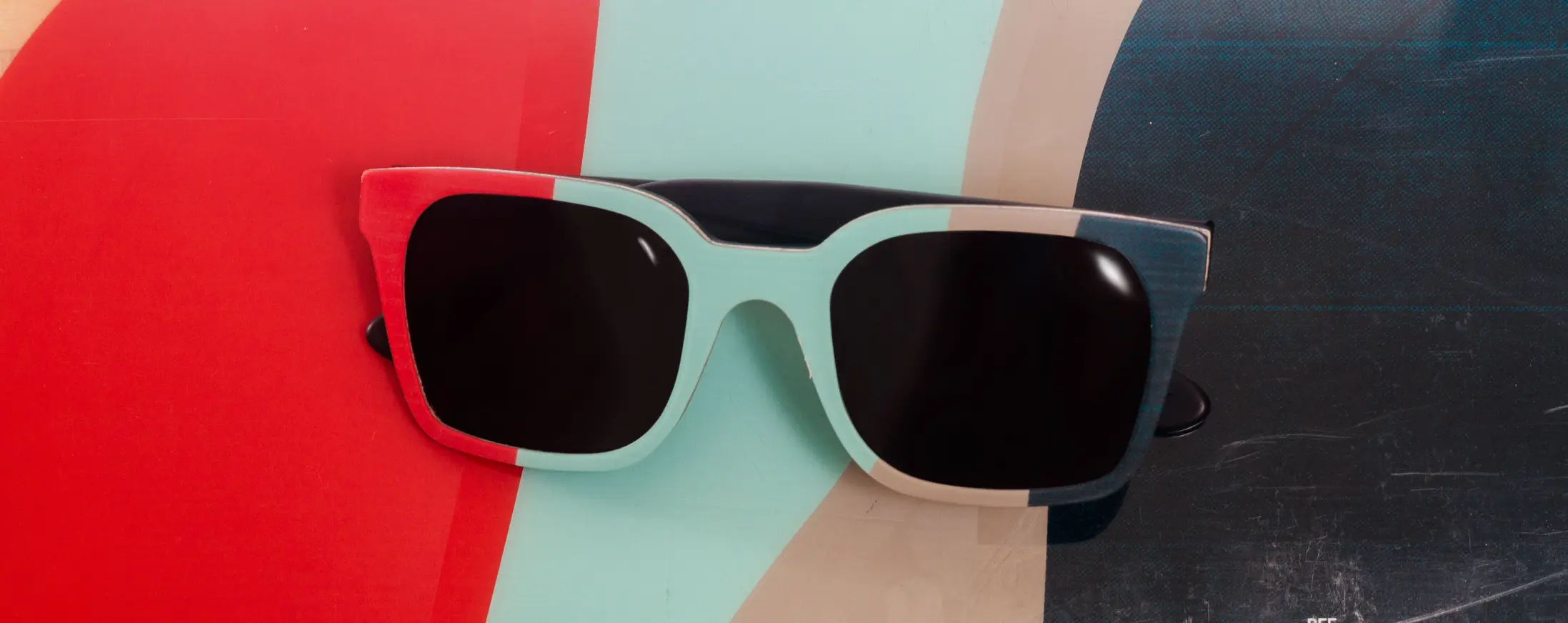
Uptitude is a brand of sunglasses and optical frames with a unique mission: giving new life to old snowboards by transforming them into one-of-a-kind eyewear.It’s a concept that blends upcycling, design, and action sports culture.
The idea
The idea was born in Trentino, where designer Ermanno Zanella decided to recycle an old snowboard in his basement, turning it into a pair of wooden sunglasses.
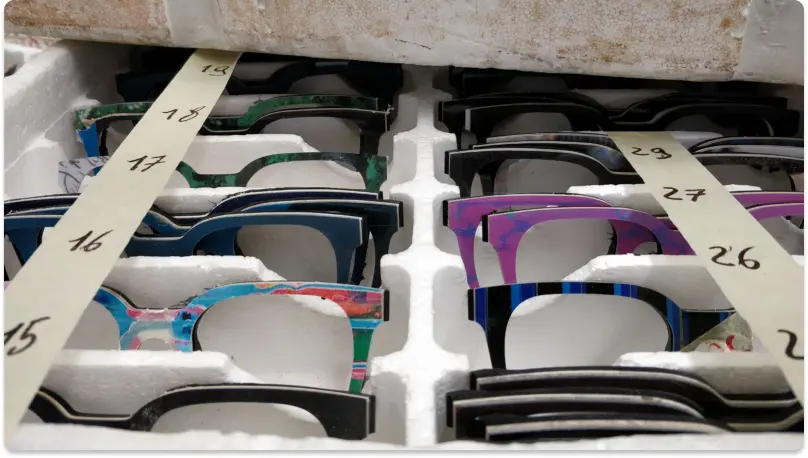
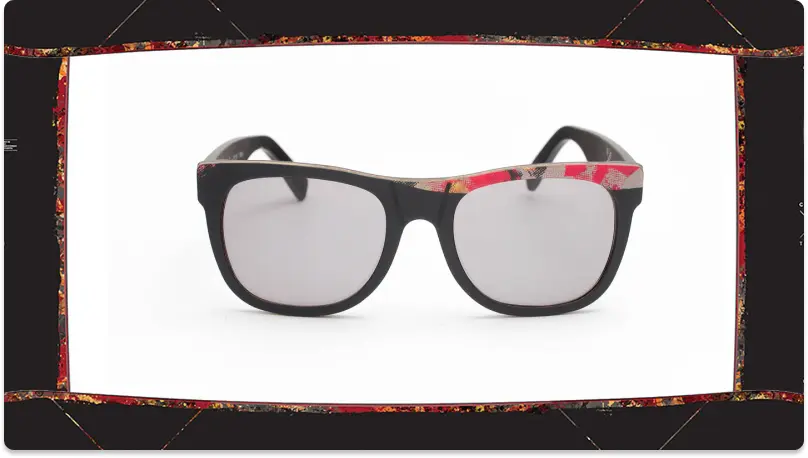
The result was something truly distinctive. Each frame is made from a laminate of wood and the snowboard’s original top sheet. On the front, every pair features a section of the board’s graphic design — creating colorful, one-of-a-kind patterns that make each piece unique.
But beyond its striking look, Uptitude embodies a deeper philosophy: reimagining waste as a resource. What once was a discarded snowboard is reborn as a stylish design accessory — proving that sustainability and creativity can go hand in hand.
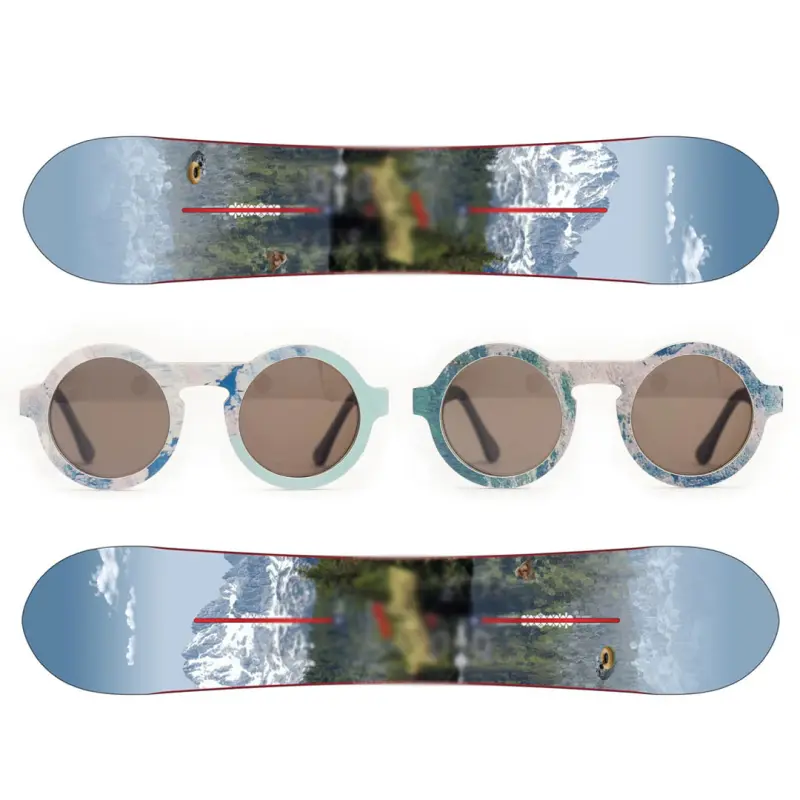
I prototipi
Prototyping took place in Austria, where Filippo Irdi and Ermanno Zanella, the founders of Uptitude, began building the brand.
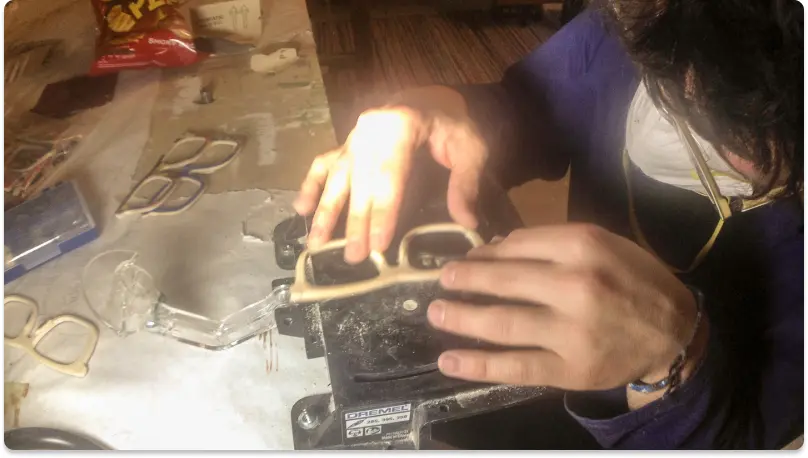
The first prototypes were made using a small three-axis milling machine. After removing the metal edges and plastic base, the snowboard could be mounted onto the mill.
From each board, they crafted a front frame and temples that already showed great aesthetic potential, though still with an amateur look. One major challenge was the variation in the wood layers inside the snowboards — since every board was different, the final product varied significantly from one pair of glasses to another.
Prototypes made with veneered wood
To make the wooden part of the frames easier to work with, two new steps were added to the production process.
The first involved planing the snowboard, removing at least a couple of millimeters of the original wood.
The second step was adding new layers of wood onto the board to make the material more workable.
During this stage of prototyping, significant progress was made. Thanks to the veneered wood on the front of the frames, it became possible to achieve more consistent results and make production more scalable.
However, some functional limitations still remained. The front of most eyewear frames is usually curved to make the glasses more wraparound and protective. With this wooden prototype, it wasn’t possible to achieve that curvature — known in technical terms as “meniscus shaping.”

Combining wood and acetate
At this stage, the goal was to make the semi-finished material more malleable and ensure a lasting meniscus shape. This was achieved by removing an additional layer of wood and adding a layer of acetate.
The acetate, applied to the planed snowboard, provided a more stable and durable meniscus. This prototype made it possible to start full-scale production: the acetate made the material sufficiently predictable and workable to produce larger batches of eyewear, turning Uptitude’s idea into a fully operational company.
How It’s Made
Upcycling Materials
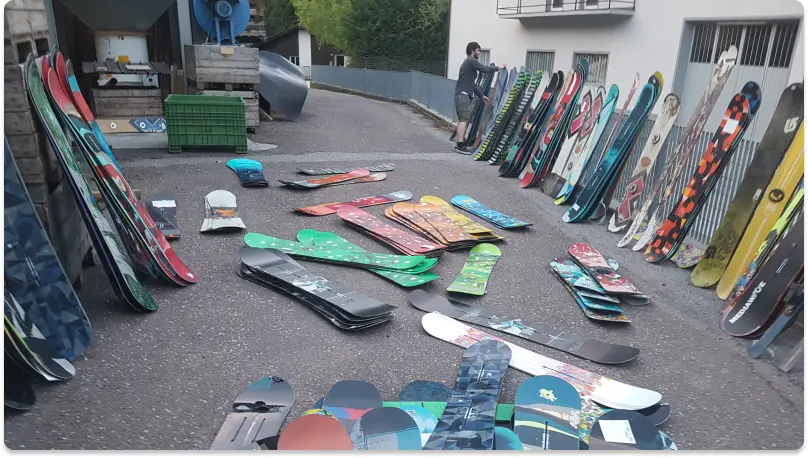
Transitioning from prototyping to full-scale production wasn’t easy. The first step was sourcing the snowboards we needed. Renting a van, we went around ski rental shops and snowboard brands, asking if we could take their old boards.
Surprisingly, this turned out to be one of the easiest steps: everyone was happy to give us boards that would otherwise have been thrown away.
Preparing the Snowboards
Preparing the Snowboards
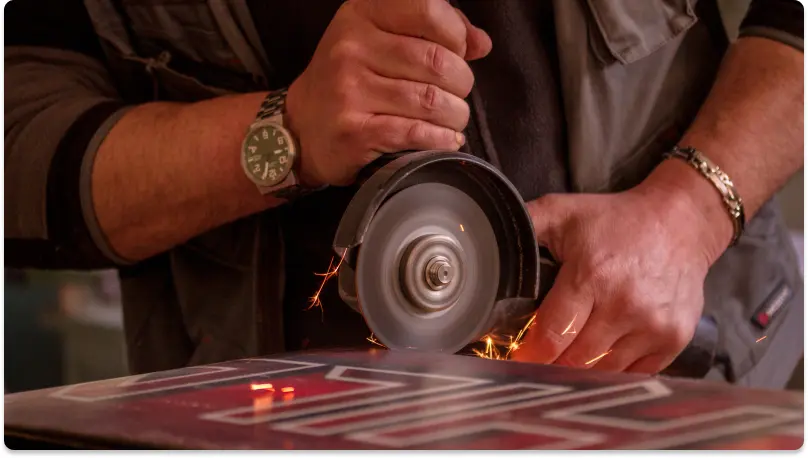
The first step in preparing the snowboards is removing the metal edges. Once the edges are taken off, the tip and tail of the board are cut to create a flat piece of snowboard.
Next, the boards are sliced along the sagittal plane using a band saw, producing two thin layers of snowboard. These layers, roughly 5 mm thick, are then planed down to about 0.5 mm.
These thin snowboard sheets are combined with sheets of acetate so that the part of the frame that rests on the nose is workable and can hold the meniscus shape. Glue is applied to the snowboard, and the “sandwich” of acetate and snowboard is pressed for 24–48 hours.
Once these laminated sheets are ready, they are cut into rectangular blocks, which are then milled on an eyewear pantograph.
The following steps are those described in our article on eyewear production.
Go to market
The Business Model
To enter the market, we decided to sell exclusively through our e-commerce, adopting a Direct-to-Consumer (D2C) model — the approach that has revolutionized the eyewear industry. Brands like Warby Parker and Direct Optics were among the first to use this model, proving that selling glasses online is possible.
Many eyewear brands had been hesitant to focus on online sales, worried that glasses need to be tried on before purchase. This is a valid concern; the brands that succeeded were those that found ways to let customers try their glasses easily while still selling online, for example by shipping sample frames.
Uptitude’s idea was to replicate this model and sell directly to consumers, combining convenience with accessibility.
The strategy
Th strategy was to build an e-commerce site using WordPress and Stripe, a low-cost but effective solution.
To promote the site, they began advertising on Facebook and Instagram, while also pursuing collaborations with snowboard brands and musicians to expand the reach
Our Social Media Content
To create social media content, we focused on two types of photos: pictures of customers wearing the glasses and product shots. Whenever someone purchased a pair, we always asked them to send us photos. The creativity of our customers was truly amazing 😄

Featured in the Italian Television
The real turning point came after a short feature on TG1, where we were interviewed to explain our production process. Following that segment, our brand name began to circulate widely, attracting media attention.
Partnership with Burton Snowboard
During a day of collecting snowboards, we ended up at Burton’s headquarters, where we asked the Returns and Warranty department if we could recycle some of their boards. They were happy to help, which eventually led to a collaboration with Burton, arguably the largest snowboard brand in the world.
We produced a limited edition of glasses made entirely from Burton snowboards, which were then sold in stores in Innsbruck and Zurich.
Our Partnership with Faction Ski
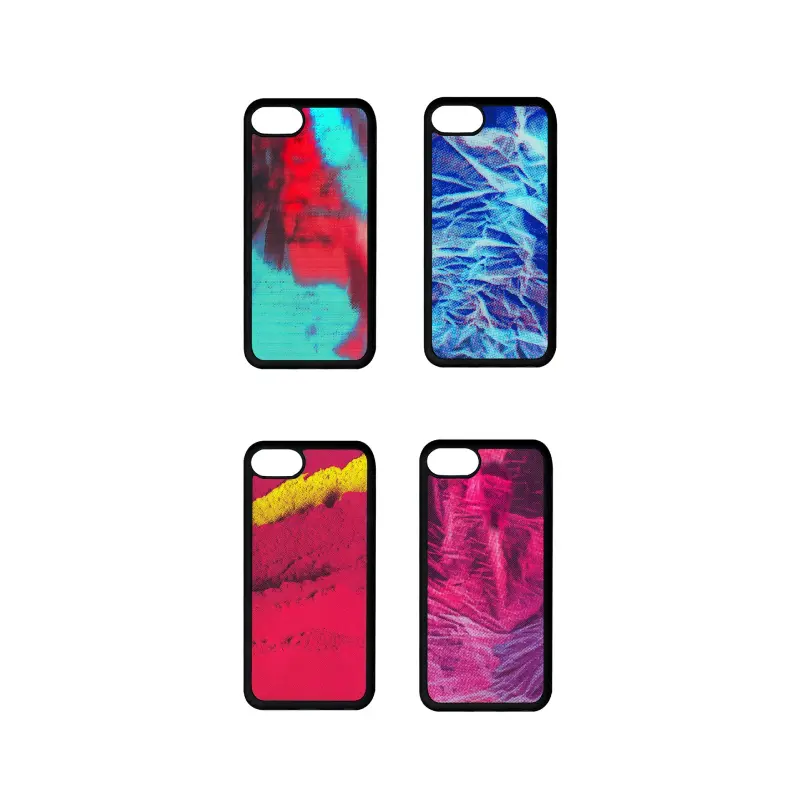
The collaboration with Faction Ski was more experimental. Using the same method, we produced smartphone cases. The product was very complex to manufacture, but it helped us increase the brand’s visibility even further.
The CB23 Glasses Made for Carl Brave
Another successful collaboration was with Carl Brave. After sponsoring him during several years of his career, we produced a limited edition CB23 made entirely of acetate to celebrate the release of his album “Notti Brave”. The glasses were given to fans during his tour.
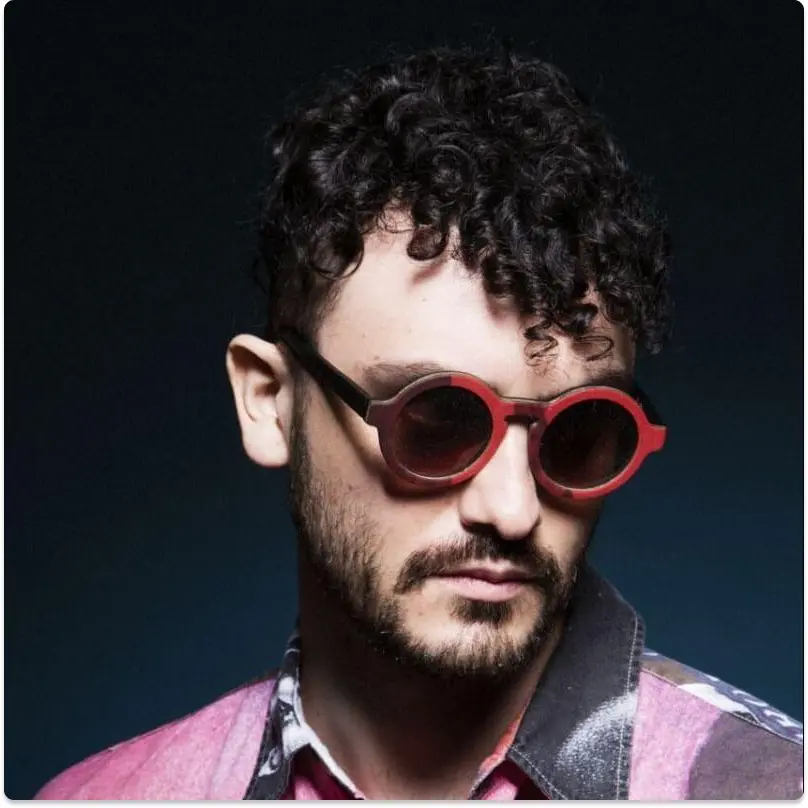
Celebrities and Artists Wearing Our Eyewear
Our eyewear has gained significant visibility thanks to a number of artists and celebrities who have worn our glasses. We never pursued formal collaborations with these individuals, but it’s clear that they genuinely liked our designs.
The End of Uptitude
In 2020, we realized that we weren’t selling enough glasses to keep the business running as we had hoped, so we made the decision to close. Despite the closure, Uptitude was an incredible journey into the world of eyewear and upcycling.

.webp)